Sports team building: the 16 best sports for teams, sorted by skill
Sorted so the people who never play sports can join in. With leagues, a sports day plan and options for remote teams.

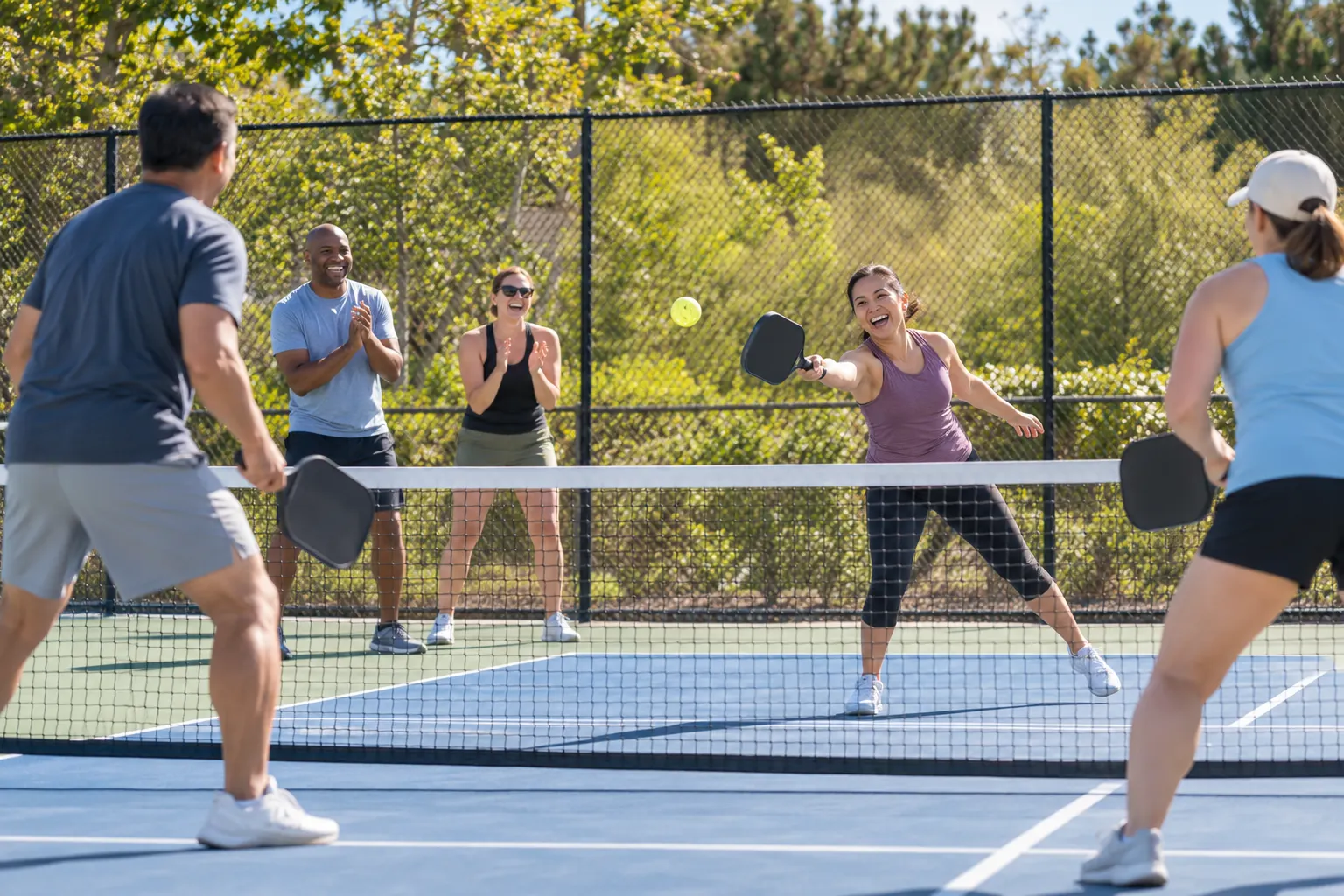
Sports team building works when the whole team plays, not just the five people who already have cleats. So the best sports for team building below are sorted by the skill they need, starting with ones anyone can play on day one. Each has the group size, the skill it asks for and why it brings a team together. Then how to join a league, a one-day company sports day, virtual and hybrid options, and how to keep it safe and inclusive.
The 16 best sports for team building, by skill
Under each: how many play together, and what it asks of players.
Anyone can play on day one
No running, no experience. The safest picks for a mixed office.
- Bowling. Turns are built in, so every person gets a moment and the whole lane cheers every frame.4 to 6 per lane · None; ask the center for bumpers or a ball ramp
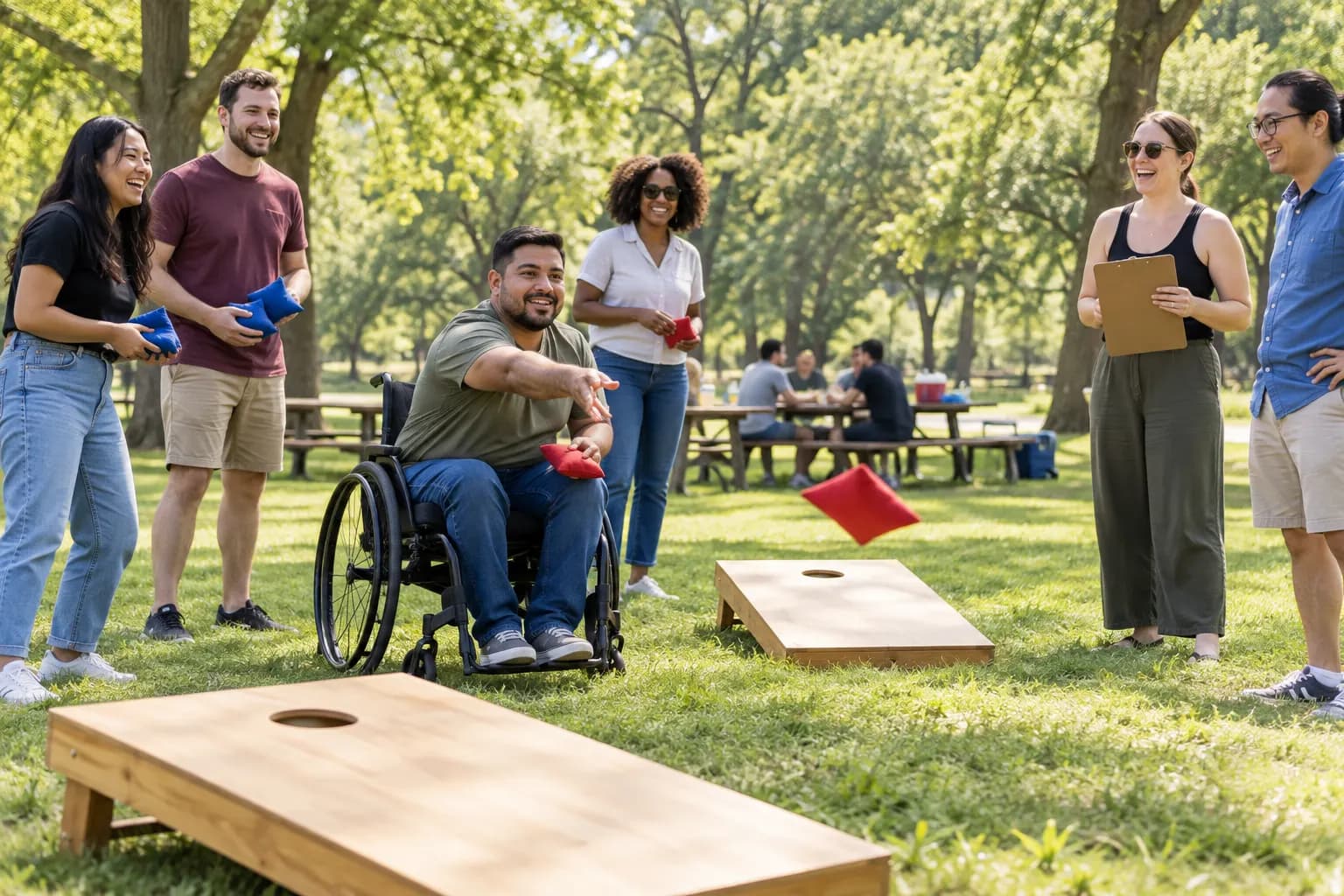
- Cornhole doubles. Partners stand 27 feet apart at opposite boards, so each one has to trust a teammate they can't huddle with.2 against 2, partners at opposite boards · None; a short underhand toss
- Table shuffleboard. Slow, quiet turns leave room for real conversation between shots.2 against 2 · None; a slide of the hand
- Darts. Someone has to do the score math, so the quiet analyst on the team becomes the most valuable player.Teams of 2 to 4 · None; standing and throwing
- Disc golf. It is a long walk in a park with time to talk, and most public courses are free to play.Groups of 4 or 5 · Low; a walk with a throw every few minutes
- Pickleball doubles. Beginners rally within minutes, and doubles partners have to call who takes each ball.4 per court · Low; underhand serves on a small court
Easy to learn, a little more moving
Beginners are welcome, and the team matters more than any one player.
- Kickball. The ball is big and slow, so first-timers still reach base, and every close play at first gets the bench yelling.8 to 11 per side, by league rules · Low; a big rubber ball and short sprints
- Slow-pitch softball. Dugout time is talk time, and positions let people choose how much they run.10 per side · Moderate; catching and hitting
- Learn-to-curl session. One player throws, two sweep and one calls the line, so a good shot needs all four talking.Teams of 4 · None to start; the club teaches the basics
- Dragon boat racing. The boat only flies when 20 people paddle in time, which is teamwork you can feel in your arms.About 20 paddlers, a drummer and a steerer · Moderate fitness, no paddling experience
- Sand volleyball. A side gets three touches, so almost no point is won by one person alone.4 to 6 per side for social games · Moderate; bumping and setting
- Bouldering. The group stands at the wall puzzling out the same route and cheering each attempt.Any number, taking turns on short walls · None with an intro lesson; no ropes needed
For teams that like to run
More running and more skill. Offer these alongside a gentler option, not instead of one.
- Ultimate. Players call their own fouls, so the whole game runs on trust between both teams.7 per side · High; lots of running and throwing
- Flag football. Every play starts in a huddle, so the team plans together dozens of times a game.5 to 8 per side · Moderate to high; quick cuts and catching
- Three-on-three basketball. With only three a side, nobody can hide and everybody touches the ball.3 per side on a half court · High; shooting and quick moves
- Futsal. The small court and rolling substitutions mean short, intense shifts and a bench that cheers.5 per side, keeper included · Moderate to high; passing on a hard court
Want a lawn game instead of a sport? Our outdoor games for adults has 40 more. Staying inside? Build an office mini golf course from books and boxes.
Company sports leagues: where to find one
A league turns one good afternoon into a weekly habit. Five places to start:
- Parks and recreation leagues. Many city parks departments run adult softball, kickball, volleyball or pickleball seasons with fields, umpires and a schedule.
- Social sports clubs. Private adult leagues in many cities run co-ed seasons with a bar or restaurant after the game.
- Bowling center leagues. Many centers run weekly leagues and can seat a company team of four or five on a regular night.
- Corporate challenge runs. Many cities hold 5K and corporate challenge races where company teams run or walk the same course.
- An in-house ladder. Players challenge anyone one or two rungs above them on the ladder at cornhole, darts or pickleball, and a winning challenger swaps places with the player they beat.
Running the company team
- Pick one weeknight and one captain, who handles sign-up, the roster and the reminder.
- Sign up about half again as many players as the minimum, since nobody makes every week.
- Many co-ed leagues require a minimum number of women on the field, so read the rulebook before you build the roster.
- Have the company cover the league fee and the shirts; a free spot gets more yeses.
- Choose a spot near the field for after the game, where the teammates who don't play can join.
A company sports day in one schedule
A field day built on real sports: every team plays every sport, and nobody sits out for long. It fits a park with a ball field and a sand court.
- 9:30
Check-in. Team shirts, water bottles and a 10-minute warm-up stretch everyone can do.
- 10:00
Kickball. Short three-inning games, so every team plays twice before lunch.
- 11:15
Cornhole and table games. A bracket for the competitive, shaded tables for everyone else.
- 12:00
Lunch. Long tables mixed across teams, with nonalcoholic drinks front and center.
- 1:00
Volleyball pool play. Every team plays two short games; the top two meet in the final.
- 2:15
Finals and awards. Team points from every sport, plus awards for best sport and loudest bench.
Prefer stations to tournaments? Our field day plan runs six teams through six stations, and these relay race ideas slot in between games. For a lower-key day, see our company picnic ideas. Need names for the teams? Try the team name generator.
Virtual and hybrid sports team building
Remote teammates can't share a court, but they can sweat, compete and cheer on the same call.
- A live fitness class. An instructor leads HIIT, cardio kickboxing or a dance workout on Zoom or Teams for 60 minutes, with easier options for beginners.
- Hosted Office Olympics. A live host runs three Olympic-style challenges the group picks on the call, with medals at the end.
- Trivia kickball on a video call. The pitcher reads a question: an easy one is a single, a hard one a double and a stumper a home run. A wrong answer is an out, and three outs switch sides.
- A team step challenge. Teams add up their steps for four weeks, so a walker in Denver and one in Dublin score for the same side.
- Sports trivia night. Mixed teams in breakout rooms, so the fans and the people who only know the halftime show both have something to add.
- A hybrid watch party. The office watches the big game together while remote fans join a video call, and everyone fills in the same prediction card before kickoff.
See our virtual fitness classes and the hosted Office Olympics, or run it yourself with a step challenge, sports trivia questions and these team workouts.
Make it work for people who don't play sports
The goal is a team that knows each other better, not a winner. Eight habits that keep everyone in the game:
- Make it optional and say so in the invite, then schedule it in work hours so caregivers can come.
- Choose the sport for the least sporty person who wants to come, not the keenest athlete.
- Add one optional question to the RSVP about access needs, and read the answers privately.
- Book venues with step-free entry, accessible restrooms, shade and somewhere to sit.
- Offer real roles off the field: captain, scorekeeper, announcer or photographer, all counted in the team score.
- Adapt the rules: a ball ramp at bowling, seated throws at cornhole, a pinch runner at kickball.
- Spread the strong players across teams so no side runs away with it, and rotate who plays.
- Keep alcohol off the center of the plan, and have water and sunscreen at every field.
Injuries, waivers and insurance
- Prevent first. Warm up, wear the right shoes, bring water and a first-aid kit, and know where the nearest urgent care is.
- Keep it non-contact. Flag instead of tackle, no slide tackles and no sliding into bases.
- Expect venue waivers. Climbing gyms, curling clubs and many adult leagues ask every player to sign their own waiver, so leave time at check-in.
- A waiver is not insurance. A venue's or league's waiver covers its own terms; it does not decide whether your company's workers' compensation applies to an injury.
Let a host run it
Rather not plan the brackets? A live host runs the competition or the workout, for the office and remote teammates on one call.
Office Olympics and three live workouts, with today’s prices.
Hosted games need about 2 weeks’ notice. Planning a bigger day? Get a free quote with your date and headcount.