Leadership retreat ideas: 28 sessions, two agendas and a planning kit
Sessions sorted by what they produce, agendas you can paste into an invite, and the survey to send first. Built for a leadership group of 5 to 25.

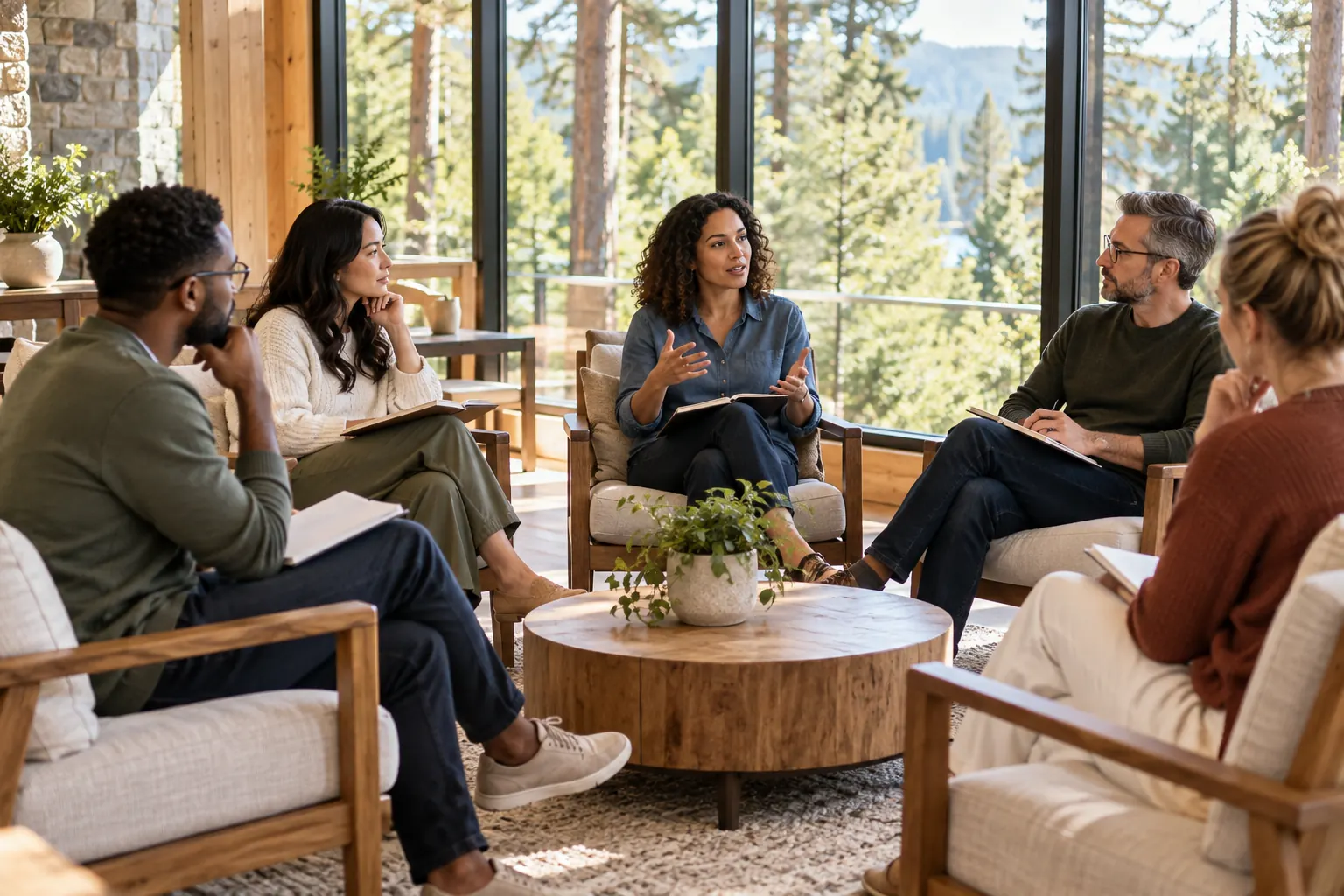
Good leadership retreat ideas start with the decision you need, not the activity. Below are 28 sessions for an executive or leadership team, sorted by the part of the day they fit, plus a one-day and a two-day agenda, a pre-retreat survey, facilitation rules and a venue checklist. Planning for the whole company instead? Use our company retreat activities.
How to plan a leadership retreat: pick the goal first
Write the one sentence the retreat has to produce. Then find it below and build the day around those sessions.
- Set next year's direction. Budget season, a new fiscal year or a plan that no longer fits. Build around score last year's bets (#1), three priorities, no more (#4) and the one-page plan (#7).
- Build a new leadership team. Several new leaders, a merger or a reorganization. Build around who decides what (#9), write the team agreements (#13) and a hosted game night at the venue (#24).
- Fix how leaders work together. Decisions get reopened, handoffs break, meetings run long. Build around read the pre-survey aloud (#8), map the handoffs (#10) and cross-team trade (#11).
- Get ready for growth or change. A launch, a new market or a big hiring year ahead. Build around pre-mortem on the new plan (#2), play the competitor (#6) and frontline panel (#16).
- Develop the leaders themselves. A strong team that has stopped learning, or a tired one. Build around a hosted leadership workshop (#14), an improv session (#15) and a solo hour outdoors (#20).
28 leadership retreat ideas and activities, by session
Times are for a group of up to about 15; add a third for bigger rooms. Numbers run through all five groups.
Strategy sessions
Morning blocks, while everyone is sharp. Each one ends in a decision.
1. Score last year's bets · 60 min
List the five biggest bets the team made a year ago, mark each won, lost or still unclear, and name what each one taught you.
2. Pre-mortem on the new plan · 45 min
It is a year from now and the plan failed. Everyone writes why, alone, then you fix the three likeliest causes.
3. The stop-doing list · 45 min
Each leader names one project, report or recurring meeting to end. Agree to end at least three.
4. Three priorities, no more · 60 min
Every leader posts their candidate priorities, the room dot-votes, then argues the shortlist down to three for the year.
5. Customer call replay · 45 min
Play two recorded customer calls (with permission) and list everything that surprised the room.
6. Play the competitor · 45 min
Half the group plans how a rival would win your best customers; the other half defends. Swap findings, keep the gaps.
7. The one-page plan · 60 min
Where we compete, how we win and what we will not do, on one page. If it spills onto page two, cut.
Sessions on how the leadership team works
Work on the seams between your teams, where most leadership problems sit.
8. Read the pre-survey aloud · 45 min
The facilitator reads the pre-retreat answers without names, themes first. The group picks the one pattern it will fix.
9. Who decides what · 45 min
List the ten decisions that come up every month and mark who decides, who is asked first and who is told after.
10. Map the handoffs · 30 min
Draw where work passes between your teams and circle the three handoffs that break most often. Each gets an owner.
11. Cross-team trade · 30 min
Each leader offers one thing their team can give another team this quarter and asks for one thing back. Write the trades down.
12. Pitch a peer's priority · 30 min
Each leader presents another leader's top priority as if it were their own; the owner then corrects what got lost.
13. Write the team agreements · 40 min
Five rules for how this leadership team disagrees, decides and talks about decisions afterward. Everyone signs the page.
Need warm-ups between these? Our leadership icebreakers are short openers for exactly this group, and the leadership activities guide has 30 more exercises with debriefs.
Learning sessions
One idea from outside the room, used the same day.
14. A hosted leadership workshop · 60 min
Book an outside facilitator for one skill the group lacks, then spend the next block using it on a real decision.
15. An improv session · 60 min
Yes-and exercises practice listening and building on ideas you did not see coming.
16. Frontline panel · 45 min
Invite three people who serve customers every day to answer the leaders' questions. The leaders only ask; they do not explain.
18. Case study hour · 45 min
Study one published company turnaround or failure, then ask where your own business is making the same choices.
Reflection sessions
Quiet blocks to put between the heavy sessions.
19. Walking breakouts · 40 min
Groups of three or four take one strategy question outside and come back with a single recommendation each.
20. A solo hour outdoors · 60 min
Phones off, three written questions about the year ahead, alone. Back together, each leader shares one answer.
21. Energy audit · 20 min
Sort last month's work into what gave you energy and what drained it, then share one change you will make.
22. Values in practice · 30 min
For each company value, name one recent leadership decision that honored it and one that did not.
23. Your leadership shadow · 30 min
Each leader writes what their team copies from them, good and bad, and talks it through with one peer.
Evening and fun
Shared time where rank stops mattering for an hour or two.
24. A hosted game night at the venue · 60 min
A host brings Feud Night or Team Trivia to your venue in 17 US cities, so no leader has to run the evening.
25. An escape room on Zoom · 60 min
A hosted murder mystery escape room on Zoom: leaders in the room and remote leaders solve the same case.
26. Cook dinner together · 90 min
Rent a kitchen or book a chef-led class and make one meal as a team. Seat people with someone they rarely work with.
27. A painting session · 60 min
A canvas painting hour with every material provided. Calm, social, and everyone leaves with a finished canvas.
28. A local outing · 120 min
A guided hike, a ballgame or a museum after hours. Pick something everyone can do, and make it optional.
Leadership retreat agenda: one day or two
Swap in your own sessions; keep the shape. Hard work in the morning, a hosted or lighter block after lunch, owners and dates at the end.
One-day leadership retreat
For one big decision. Copy it as text to paste into a doc or the invite.
Arrive and coffee. Pre-survey themes on the wall for people to read.
Open. The one sentence this day has to produce, the team agreements, and what stays in the room.
Score last year's bets. Five bets, won, lost or unclear, and the lesson in each.
Break. Laptops closed from here until lunch.
The big decision. One question the team has been avoiding. Pre-mortem first, then debate, then decide.
Lunch. Seat people next to the colleague they disagreed with most this morning.
Hosted session. An improv session or a leadership workshop with an outside facilitator.
Three priorities. Dot-vote, then cut the list to three for the year.
Break. Outside if you can.
Owners and dates. Every decision gets one owner, one date and a line on who tells whom.
Close. Each leader says one change in how they will lead. Book the 30-day check-in now.
Done.
One-day leadership retreat agenda

One-day leadership retreat
8:30 am  Arrive and coffee: Pre-survey themes on the wall for people to read.
9:00 am  Open: The one sentence this day has to produce, the team agreements, and what stays in the room.
9:30 am  Score last year's bets: Five bets, won, lost or unclear, and the lesson in each.
10:30 am  Break: Laptops closed from here until lunch.
10:45 am  The big decision: One question the team has been avoiding. Pre-mortem first, then debate, then decide.
12:30 pm  Lunch: Seat people next to the colleague they disagreed with most this morning.
1:30 pm  Hosted session: An improv session or a leadership workshop with an outside facilitator.
2:30 pm  Three priorities: Dot-vote, then cut the list to three for the year.
3:30 pm  Break: Outside if you can.
3:45 pm  Owners and dates: Every decision gets one owner, one date and a line on who tells whom.
4:30 pm  Close: Each leader says one change in how they will lead. Book the 30-day check-in now.
5:00 pm  Done
Two-day leadership retreat, lunch to lunch
A common executive format: one evening together and a night's sleep before you decide.
Day 1: arrive at lunch
Lunch on arrival. No agenda, just food and catching up.
Open. Why we are here, the decisions we leave with, and the team agreements.
Read the pre-survey aloud. Themes without names; pick the pattern to fix.
Break. Coffee and a stretch.
Strategy block. Score last year's bets, then play the competitor.
Free time. Check in, call home, walk. Leave it empty.
Dinner. Mixed seating, no business topics required.
Evening game. A hosted game night at the venue, or an escape room on Zoom with remote leaders.
Done.
Day 2: decide and leave at lunch
Walk or breakfast. Walking breakouts for early risers, breakfast for the rest.
Overnight check. One thing each leader sees differently after a night's sleep.
The big decision. Pre-mortem, debate, decide. Three priorities, no more.
Break. Short, so the last block keeps its time.
Hosted session. A leadership workshop or improv session, applied to the decision you just made.
Owners, dates and the message. Who owns what, and what every leader tells their team on Monday.
Close. One change each, the 30-day check-in booked, then lunch and travel home.
Done.
Two-day leadership retreat agenda (lunch to lunch)

Day 1: arrive at lunch
12:00 pm  Lunch on arrival: No agenda, just food and catching up.
1:00 pm  Open: Why we are here, the decisions we leave with, and the team agreements.
1:30 pm  Read the pre-survey aloud: Themes without names; pick the pattern to fix.
2:30 pm  Break: Coffee and a stretch.
2:45 pm  Strategy block: Score last year's bets, then play the competitor.
4:15 pm  Free time: Check in, call home, walk. Leave it empty.
6:00 pm  Dinner: Mixed seating, no business topics required.
7:30 pm  Evening game: A hosted game night at the venue, or an escape room on Zoom with remote leaders.
8:30 pm  Done

Day 2: decide and leave at lunch
7:30 am  Walk or breakfast: Walking breakouts for early risers, breakfast for the rest.
8:30 am  Overnight check: One thing each leader sees differently after a night's sleep.
9:00 am  The big decision: Pre-mortem, debate, decide. Three priorities, no more.
10:30 am  Break: Short, so the last block keeps its time.
10:45 am  Hosted session: A leadership workshop or improv session, applied to the decision you just made.
11:45 am  Owners, dates and the message: Who owns what, and what every leader tells their team on Monday.
12:30 pm  Close: One change each, the 30-day check-in booked, then lunch and travel home.
1:00 pm  Done
Only have a morning? Our leadership team building page has a half-day offsite agenda. Leaders spread across offices can run the strategy blocks with these virtual offsite ideas.
Pre-retreat survey: 10 questions to send first
Send it two weeks out and read every answer before you fix the agenda. Read the themes aloud on day one, without names.
1. What is the one decision this group has to make at the retreat?
2. Which topic do you expect to be hardest to discuss openly?
3. What is working in how this leadership team runs that we should protect?
4. What slows this leadership team down the most?
5. Which current priority would you pause or stop, and why?
6. From 1 to 5, how clear are you on the company's top three priorities for the next 12 months?
7. What do you need from the other leaders in this group that you are not getting?
8. What would make you call this retreat a waste of your time?
9. What should we keep off the agenda this time?
10. Is there anything we should plan for so you can take full part, such as diet, access or travel?
1. What is the one decision this group has to make at the retreat? 2. Which topic do you expect to be hardest to discuss openly? 3. What is working in how this leadership team runs that we should protect? 4. What slows this leadership team down the most? 5. Which current priority would you pause or stop, and why? 6. From 1 to 5, how clear are you on the company's top three priorities for the next 12 months? 7. What do you need from the other leaders in this group that you are not getting? 8. What would make you call this retreat a waste of your time? 9. What should we keep off the agenda this time? 10. Is there anything we should plan for so you can take full part, such as diet, access or travel?
Answer question 6 on its 1 to 5 scale and the rest in a sentence or two. Ask question 6 again at the 30-day check-in and compare. For a company-wide pulse after the retreat, see these employee engagement survey questions.
How to facilitate a leadership retreat
Six rules that keep a room of senior people moving toward decisions.
- Pick a facilitator who is not the boss. The most senior person should argue, not referee. An outside host or a trusted peer from another team keeps time and calls out circles.
- Send pre-reads a week out. Ten pages at most, and open the first session assuming people read them. Presentations eat retreats.
- Keep a decision log on the wall. Decision, owner, date, who tells whom. Read it back at the end of every block.
- Ask the newest leader first. In every debate, the person with the least tenure speaks before the person with the most, so rank doesn't anchor the answer.
- Agree what stays in the room. Say at the open what can be shared with teams afterward and what cannot, before anyone says anything hard.
- Use a parking lot. Good topics that don't serve the goal go on a sheet with an owner and a later date, not into the agenda.
Leadership retreat venue checklist
Ten things to confirm before you sign, whether it is a lodge, a hotel or your own office.
- A private room with a door that fits everyone around one table or in a circle.
- A breakout space for every four or five people.
- Wall space or whiteboards for the decision log and sticky notes.
- Daylight in the main room; a windowless room drains a long day.
- A screen, a camera and reliable Wi-Fi for remote leaders or a hosted session.
- Somewhere to walk outside between sessions.
- Meal times you control, and a kitchen that handles the dietary needs you collected.
- Step-free access and accessible rooms for anyone who needs them.
- Quiet corners for leaders who must take a call during a break.
- A room you can use after dinner for the evening activity.
Run part of it with a host
Someone else runs the evening or the learning block, so every leader takes part.
- For the evening at your venue: our hosts bring Feud Night or Team Trivia to your hotel, lodge or office in 17 US cities, and Canvas Painting in 30. See every city on in-person team events.
- For the learning block: Improv practices “Yes, And”, storytelling and handling the unexpected. The Art of Self-Leadership covers setting meaningful goals and getting past self-doubt, and Success Supercharge is about focus and putting your energy where it matters. For a talk, see our keynote speakers.
- For remote leaders: a hosted virtual escape room works for hybrid groups, with leaders in the room and remote leaders solving the same case. A hybrid retreat works either way: a game in the room plus a virtual session for remote leaders, or one virtual event for everyone.
- Virtual sessions run live on Zoom by default (Teams, Google Meet or Webex on request), about an hour each. Book about 2 weeks ahead; hosted games can run as two sessions for teams split across time zones.
Four sessions that fit a retreat, with today’s price.
Send your dates, city and headcount and get a free quote. We reply within 24 hours.