Sustainable Team Building: Introducing Composting in the Workplace
Sustainable team building starts with meaningful action. KraftyLab’s composting workshops help teams turn everyday waste into eco-friendly impact, promoting collaboration, awareness, and greener workplace habits while making sustainability engaging, practical, and memorable.
 KraftyLab Team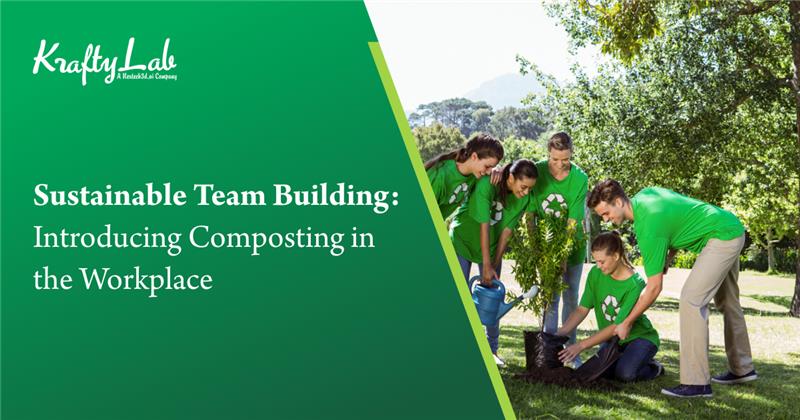
Sustainable team building is no longer just a trend. It is becoming a core part of how organizations think about culture, engagement, and long-term impact. Employees today are not only looking for connection at work, they are also looking for purpose. They want to be part of organizations that care about the environment and take meaningful steps toward reducing their impact. Furthermore, companies are rethinking how they approach team building. Traditional activities often create short-term excitement but fail to leave a lasting impression. This is where sustainability-focused experiences are starting to stand out. They combine engagement with intention, making team building more meaningful.
One of the most practical and impactful ways to bring this shift into the workplace is through composting in the workplace. It may sound simple at first, but composting has the potential to transform how teams interact, learn, and contribute to a shared goal. This blog explores how composting can evolve from a sustainability initiative into a powerful team building experience that strengthens both culture and connection.
What Is Sustainable Team Building
Sustainable team building refers to activities that not only bring employees together but also contribute positively to the environment and society. Unlike traditional formats, these experiences are designed with purpose at their core. Instead of focusing only on entertainment, sustainable activities align with broader corporate sustainability initiatives and workplace sustainability initiatives. They help organizations create experiences that are engaging while also supporting environmental goals.
This approach is closely connected to eco-friendly team building activities and green team building ideas. These activities encourage employees to think beyond their immediate roles and consider their impact on the world around them. More importantly, sustainable team building helps build a sustainability-driven workplace culture where employees feel connected not just to each other, but also to a shared purpose.
Why Traditional Team Building Needs a Rethink
Many organizations still rely on traditional formats such as games, offsite events, or one-time activities. While these can be enjoyable in the moment, they often fall short when it comes to creating lasting value. Employees may participate, laugh, and engage temporarily, but the impact tends to fade quickly once the activity ends.
In a time where organizations are investing heavily in employee engagement activities for organizations, corporate sustainability initiatives, and workplace sustainability initiatives, there is a growing expectation that team building should contribute to something more meaningful. This is where the gap becomes clear. Traditional formats rarely align with evolving workplace priorities such as eco-conscious workplace culture, green office initiatives, and sustainability-driven workplace culture.
Overemphasis on Entertainment
Many traditional activities are designed with entertainment as the primary goal. While fun is important, it cannot be the only outcome. Activities that focus only on enjoyment often fail to create deeper engagement or meaningful connection.
Employees may enjoy the experience in the moment, but it does not translate into stronger collaboration or long-term cultural impact. This is why organizations are shifting toward eco-friendly team building activities and sustainable employee engagement activities that combine enjoyment with purpose.
Modern teams are looking for experiences that feel relevant and aligned with their values. This is where green team building ideas and environmental team building activities begin to stand out.
Lack of Long-Term Impact
One of the biggest limitations of traditional team building is the lack of continuity. Most activities are designed as one-time events with no follow-up or integration into daily work life.
This limits their effectiveness as employee engagement activities for organizations. Without reinforcement or connection to ongoing initiatives, the benefits quickly fade.
In contrast, sustainable approaches such as workplace composting programs or employee sustainability programs create ongoing participation. They encourage employees to engage repeatedly, turning team building into a continuous experience rather than a single event.
This shift is essential for organizations aiming to build sustainable workplace practices and long-term engagement.
Disconnect from Company Values
As companies invest more in corporate social responsibility activities and ESG initiatives for employees, there is increasing pressure to align internal initiatives with these values.
Traditional team building often exists separately from these efforts. It may be enjoyable, but it does not contribute to broader organizational goals such as workplace environmental impact reduction or corporate environmental programs.
This disconnect can reduce the perceived value of team building activities. Employees are more likely to engage when they see a clear connection between what they are doing and what the organization stands for.
This is why many companies are exploring sustainable team building ideas for offices and team building activities focused on sustainability that create both engagement and impact.
Introducing Composting as a Team Building Activity
Composting is the process of turning organic waste into nutrient-rich material that supports plant growth. While it is traditionally viewed as an environmental practice, it is increasingly being recognized as a powerful tool for sustainable team building.
When introduced as part of workplace composting programs, composting becomes more than just a sustainability initiative. It becomes a shared activity that brings employees together around a common goal.
Employees learn how to manage waste, understand its environmental impact, and contribute to a system that creates visible results over time. This makes it a highly effective composting team building activity for employees.
Unlike many traditional activities, composting feels practical and relevant. It is directly connected to everyday behavior, which makes it easier for employees to understand and participate in.
It also aligns seamlessly with broader office sustainability ideas, green office initiatives, and corporate sustainability initiatives. This alignment increases its value as both an engagement tool and a cultural driver.
In many ways, composting represents a new category of eco-friendly corporate team building experiences that combine purpose with participation.
Why Composting Works for Team Building
Hands-On and Interactive
Composting is naturally engaging because it requires active participation. Employees are not passive observers. They are involved in sorting waste, managing compost systems, and contributing to the process.
This makes it one of the most effective interactive team building ideas and a strong addition to experiential team building workshops.
Hands-on activities tend to create stronger engagement because they involve both physical and mental participation. This is why composting stands out among other team building activities focused on sustainability.
Purpose-Driven Engagement
One of the biggest advantages of composting is its connection to purpose. Employees can see how their actions contribute to reducing waste and supporting the environment.
This creates a sense of ownership and responsibility, which is essential for meaningful engagement. It aligns closely with employee sustainability programs, green employee engagement strategies, and purpose-driven team building approaches.
Purpose-driven experiences tend to leave a lasting impression because they connect individual actions to larger outcomes.
Encourages Collaboration
Composting is not an individual activity. It requires coordination and teamwork. Employees need to work together to manage waste streams, maintain compost systems, and ensure consistency.
This naturally strengthens collaboration and communication, making it a valuable addition to team building workshops for companies.
It also encourages cross-functional interaction, which supports broader corporate team building experiences.
Creates Awareness
One of the most impactful outcomes of composting is the awareness it creates. Employees gain a deeper understanding of waste management and environmental responsibility.
This awareness often extends beyond the workplace, influencing personal habits and behaviors.
For organizations focused on workplace environmental impact reduction and climate-conscious workplaces, this awareness is a key benefit.
How to Start a Workplace Composting Program
Starting a composting initiative does not have to feel overwhelming or resource-heavy. With a clear structure and thoughtful planning, organizations can build workplace composting programs that are both practical and engaging. The goal is not just to introduce a system, but to create a process that employees can easily adopt and sustain over time.
When done right, composting becomes more than an operational change. It becomes a key part of sustainable workplace practices, supporting both environmental goals and long-term employee sustainability programs.
Assess Your Office Waste
The first step in building an effective composting system is understanding what kind of waste your workplace generates. Every organization is different, and the success of your program depends on how well it aligns with your existing waste patterns.
Conducting a simple waste audit can provide valuable insights. Identify how much organic waste is produced daily, where it comes from, and how it is currently managed. This process helps uncover opportunities for workplace environmental impact reduction and highlights areas where composting can make the most difference.
This step also supports broader office sustainability ideas and lays the foundation for more structured corporate environmental programs. When employees are involved in this assessment, it also creates early awareness and encourages participation from the beginning.
Choose the Right Composting System
Once you understand your waste, the next step is selecting a composting method that fits your workplace. The right system depends on factors such as office size, available space, and operational capacity.
Organizations can choose from on-site composting setups or partner with external composting services. On-site systems work well for offices with dedicated space and resources, while external partnerships are ideal for companies looking for a more managed solution.
Selecting the right approach ensures that your workplace composting programs remain efficient and scalable. It also helps align your efforts with broader zero waste workplace initiatives and long-term corporate sustainability initiatives.
A well-chosen system reduces friction and makes it easier for employees to participate consistently.
Train and Educate Employees
Training is one of the most important components of a successful composting initiative. Employees need to clearly understand what can be composted, how to sort waste, and why the process matters.
This is where organizations can integrate composting into their employee sustainability programs and sustainability workshops for employees. Instead of presenting composting as a rule, it should be introduced as a shared responsibility and learning opportunity.
Simple training sessions, visual guides, and ongoing communication can make a significant difference. When employees feel informed and confident, participation becomes more natural.
Education also strengthens eco-conscious workplace culture by reinforcing the importance of sustainability in everyday actions.
Make Participation Simple and Accessible
Even the best-designed program can fail if participation feels complicated. Simplicity is key when it comes to encouraging consistent involvement.
Clear labeling on bins, easy-to-follow instructions, and convenient placement of composting stations can significantly improve participation rates. Employees should not have to think too much about the process. It should feel intuitive.
Creating simple systems supports sustainable employee engagement activities and ensures that composting becomes part of daily routines rather than an additional task.
Accessibility also plays a role in inclusivity. When the process is easy for everyone to follow, it encourages broader participation across teams and departments.
Track Progress and Measure Impact
Tracking progress is essential for maintaining momentum and demonstrating value. When employees can see the impact of their efforts, it reinforces motivation and encourages continued participation.
Organizations can measure factors such as waste reduction, compost output, and participation levels. Sharing these insights regularly helps create transparency and builds a sense of achievement.
This step is especially important for companies aligning with corporate sustainability initiatives and ESG initiatives for employees. Data from composting programs can contribute to sustainability reporting and showcase measurable progress.
Tracking also helps identify areas for improvement, ensuring that the program continues to evolve and remain effective.
Align with Broader Sustainability Goals
A composting initiative should not exist in isolation. It becomes far more impactful when it is integrated into broader organizational efforts.
Aligning composting with green office initiatives, corporate social responsibility activities, and team building activities focused on sustainability creates a more cohesive approach. It connects individual actions to larger organizational goals.
This alignment strengthens both engagement and impact. Employees are more likely to participate when they understand how their actions contribute to a bigger picture.
By embedding composting into daily operations and cultural practices, organizations can successfully implement how to start a workplace composting program while supporting long-term sustainable workplace practices and zero waste workplace initiatives.
Types of Workplace Composting Activities
Organizations can design a variety of team building activities focused on sustainability around composting. These activities can be tailored to different team sizes, goals, and workplace environments. Composting workshops are one of the most effective formats. A composting workshop for corporate teams introduces employees to the fundamentals of composting while allowing them to participate hands-on. This format combines learning with engagement, making it one of the most impactful sustainability workshops for employees.
Office waste audits are another valuable activity. Teams analyze the type and volume of waste generated within the workplace. This creates awareness and encourages employees to adopt more sustainable habits. DIY compost bin creation adds a creative and collaborative element. Employees work together to design and build composting systems, making it a strong example of eco-friendly team building activities.
Zero waste challenges are particularly effective for ongoing engagement. Teams compete or collaborate to reduce waste over a defined period. This supports zero waste workplace initiatives and encourages continuous participation. These activities fit seamlessly within corporate environmental programs and support broader office sustainability ideas and green office initiatives.
Benefits of Composting Team Building for Organizations
Organizations that invest in sustainable team building are beginning to see a clear shift in how employees engage, collaborate, and connect with company values. Composting, in particular, stands out because it blends everyday action with long-term impact. It does not feel like an isolated activity. It becomes part of how teams function and interact over time.
Improved Employee Engagement
Employees today are more conscious of the impact their workplace has on the environment. They want to contribute to something that feels meaningful rather than just participate in routine activities. This is where composting creates a strong difference.
When employees take part in workplace composting programs, they are not just completing a task. They are contributing to a larger goal of reducing waste and supporting sustainability. This sense of contribution builds ownership and makes participation more genuine.
Unlike traditional activities, composting continues beyond a single session. It becomes part of ongoing employee engagement activities for organizations, which helps maintain interest and involvement over time. This continuity is what transforms engagement from short-term participation into long-term commitment.
It also aligns with broader employee sustainability programs and green employee engagement strategies, making employees feel more connected to the organization’s purpose.
Stronger Team Collaboration
Composting naturally encourages collaboration because it requires shared responsibility. Teams need to coordinate how waste is sorted, how systems are maintained, and how processes are improved.
This ongoing interaction strengthens communication in a way that feels practical rather than forced. Employees begin to work together outside of their usual roles, which helps break silos and encourages cross-functional relationships.
As part of team building activities focused on sustainability, composting creates an environment where teamwork develops organically. Employees are solving small challenges together, sharing ideas, and contributing collectively to a system that evolves over time.
This makes it one of the most effective forms of environmental team building activities, where collaboration is built into the activity itself rather than being artificially structured.
Enhanced Company Culture
Culture is shaped by what organizations consistently do, not just what they say. Composting supports a culture that values responsibility, awareness, and collective action.
When companies invest in sustainable workplace practices and eco-conscious workplace culture, employees begin to see these values reflected in their daily routines. This consistency strengthens trust and reinforces the organization’s commitment to sustainability.
Over time, initiatives like composting contribute to a sustainability-driven workplace culture where employees feel proud to be part of the organization. They are not just working for a company. They are contributing to something that aligns with their personal values.
This cultural shift also supports broader workplace sustainability initiatives and helps organizations build a more engaged and motivated workforce.
Environmental Impact
One of the most tangible benefits of composting is its impact on waste reduction. Offices generate a significant amount of organic waste, and composting provides a practical way to manage it responsibly.
By implementing workplace composting programs, organizations can reduce landfill waste and contribute to workplace environmental impact reduction. This not only supports internal sustainability goals but also aligns with global efforts toward more responsible consumption.
Composting also complements other zero waste workplace initiatives and strengthens overall corporate environmental programs. Employees can see the direct results of their efforts, which reinforces the value of their participation.
This visible impact is important because it makes sustainability feel real and achievable rather than abstract.
Brand Reputation
Organizations that actively invest in sustainability are increasingly recognized as forward-thinking and responsible. This perception plays a significant role in attracting both talent and clients.
Employees are more likely to feel proud of working for a company that prioritizes corporate sustainability initiatives and meaningful corporate social responsibility activities. This sense of pride often translates into higher retention and stronger advocacy.
Externally, sustainability efforts enhance brand image. Clients and stakeholders are paying closer attention to how companies operate, and initiatives like composting demonstrate a genuine commitment to environmental responsibility.
This is particularly relevant for organizations aligning with ESG initiatives for employees and broader sustainability goals. It shows that the company is not just talking about impact but actively working toward it. For many organizations, this combination of internal engagement and external perception is what makes composting a valuable addition to their corporate team building activities USA strategies and overall sustainability roadmap.
Conclusion
Sustainability at work does not have to start with large, complex initiatives. Sometimes, the most meaningful change begins with something as simple as how we manage everyday waste. Composting brings that shift into focus. It turns routine behavior into a shared effort, and in doing so, it creates connection, awareness, and a sense of purpose across teams. What makes it powerful is not just the environmental impact. It is the way it brings people together around something that feels real and ongoing. Employees are no longer just participating in an activity. They are contributing to a system that reflects what the organization stands for.
As workplaces continue to evolve, the focus is clearly moving toward experiences that feel intentional and aligned with larger goals. Composting is one of those rare initiatives that supports both engagement and sustainability without feeling forced. It is simple, practical, and surprisingly effective. KraftyLab helps organizations bring sustainable team building to life through thoughtfully designed, hands-on experiences that go beyond traditional activities. From eco-conscious workshops to purpose-driven engagement formats, every session is built to create real connection while supporting meaningful impact.
If you are exploring ways to introduce initiatives like composting in the workplace or other eco-friendly team building activities, KraftyLab can help you design experiences that align with your culture and goals. Book a session and start building a workplace where engagement and sustainability grow together.
Looking for engaging team-building activities? Book a demo and explore KraftyLab experiences.
FAQs
1. What is workplace composting
Workplace composting involves collecting organic waste in the office and converting it into compost instead of sending it to landfills. It supports sustainability while encouraging employee participation.
2. How does composting support team building
Composting creates shared responsibility among employees, encouraging collaboration, communication, and collective ownership of a meaningful initiative.
3. Is composting suitable for all office sizes
Yes, composting can be adapted for both small and large workplaces through on-site systems or external partnerships depending on available resources.
4. What are the benefits of composting programs for employees
Employees gain awareness about sustainability, feel more engaged, and experience a stronger connection to workplace values through participation.
5. How can companies encourage employees to participate in composting
Clear instructions, accessible systems, and regular communication help employees understand the process and stay involved consistently.
6. Does composting require a lot of maintenance
With the right system and basic guidelines, composting can be managed efficiently without requiring extensive effort or resources.
7. Can composting be part of corporate sustainability strategies
Yes, composting aligns well with sustainability goals and contributes to broader environmental and ESG initiatives within organizations.
8. What type of waste can be composted in offices
Common compostable waste includes fruit peels, vegetable scraps, coffee grounds, and certain biodegradable materials.
9. How do you measure the success of a composting program
Success can be measured through waste reduction, employee participation, and the overall impact on sustainability goals.
10. Why are companies investing in sustainable team building
Organizations are focusing on sustainability to improve engagement, strengthen culture, and align with environmental and social responsibilities.