Virtual Escape Rooms That Enhance Team Collaboration Skills
Virtual escape rooms boost team communication by encouraging collaboration, problem-solving, and real-time interaction. They break silos, build trust, and keep teams engaged through fun, immersive challenges—making them an effective tool for stronger workplace connections.
 KraftyLab Team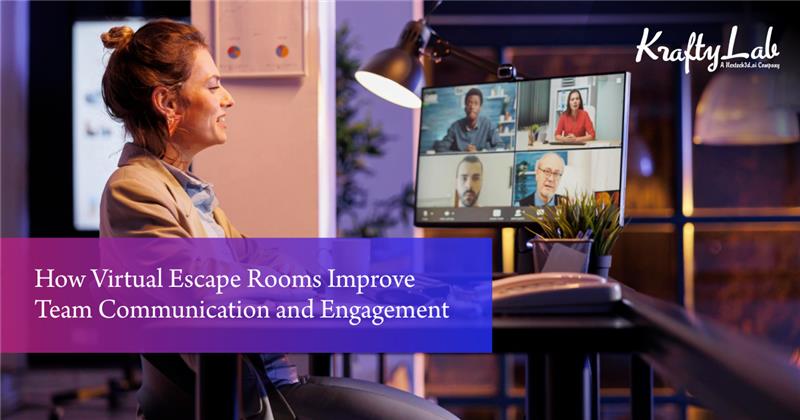
Virtual escape room team building is quickly becoming one of the most effective ways to strengthen collaboration in modern workplaces. As teams become more distributed, many organizations are facing a common challenge. Communication feels fragmented, engagement is inconsistent, and traditional approaches to team building are no longer delivering results. Emails, chats, and virtual meetings have replaced spontaneous conversations. While these tools help teams stay connected, they often lack the depth needed to build real relationships. This gap becomes even more visible when teams need to collaborate under pressure or solve problems together.
This is where virtual escape rooms step in as a powerful solution. They are not just games. They are structured, immersive experiences that bring teams together in real time. By combining problem solving, communication, and shared goals, they create an environment where employees naturally interact, collaborate, and engage. In this blog, we explore how virtual escape room team building improves communication, boosts engagement, and helps teams work better together in a digital-first world.
What Are Virtual Escape Rooms
Virtual escape rooms are immersive, interactive experiences designed to bring teams together in a digital environment where collaboration is essential. Unlike static or passive formats, these are dynamic online escape room for teams experiences where participants must actively engage, think critically, and communicate continuously to progress.
A well-designed virtual escape room team building session places participants inside a storyline. It could be solving a mystery, escaping a locked space, or completing a mission under pressure. What makes it powerful is not just the theme, but the structure. Every participant contributes to solving interconnected puzzles, making it one of the most effective interactive virtual team building activities for employees.
These experiences are carefully designed to simulate real workplace dynamics. Teams must gather information, interpret clues, and make decisions collectively. This makes them far more impactful than traditional virtual team building activities, where participation is often optional or surface-level.
A typical virtual escape room experience includes a strong narrative, layered challenges, and real-time interaction. Teams move through different stages, unlocking clues and progressing toward a final objective. The time-bound nature adds urgency, making communication sharper and more focused. This is why many organizations are now choosing online escape room games for corporate teams as part of their corporate team building experiences. They are not just activities. They are structured immersive team building experiences that drive engagement and collaboration naturally.
Why Team Communication Is Struggling Today
Before exploring solutions, it is important to understand why communication has become such a persistent challenge in modern workplaces. Many organizations have invested heavily in tools, platforms, and processes, yet they continue to face team communication problems at work. The issue is not a lack of communication. It is the quality, clarity, and consistency of that communication that is breaking down.
As teams become more distributed, communication is no longer just about exchanging information. It is about creating alignment, building trust, and enabling collaboration across different locations, roles, and working styles. Without the right environment, even frequent communication can feel fragmented and ineffective.
Remote Work Silos
Remote work has introduced flexibility and autonomy, but it has also created invisible boundaries within teams. Employees often focus on their individual tasks, connecting with others only when necessary. Over time, this reduces natural collaboration and contributes to lack of communication in remote teams. In a physical office, interaction happens organically. People ask quick questions, share updates casually, and collaborate without planning every conversation. In remote setups, these interactions need to be scheduled, which reduces spontaneity.
As a result, teams begin to operate in silos. Departments become more isolated, and cross-functional communication becomes limited. Information does not flow as freely, and collaboration starts to feel like a process rather than a natural exchange.
This shift is one of the main reasons organizations are turning to virtual collaboration activities and structured team communication activities that recreate shared experiences and encourage interaction beyond work tasks.
Over-Reliance on Tools
Modern workplaces rely heavily on digital tools to stay connected. Emails, messaging platforms, and project management systems have become essential. However, over-reliance on these tools has created new challenges. Written communication often lacks tone and context. A short message intended to be efficient may come across as abrupt. Instructions may be misunderstood. Feedback may feel unclear or incomplete. These small gaps add up, contributing to ongoing team communication problems at work.
Another challenge is communication overload. Employees receive a constant stream of messages across multiple platforms. Important information can get buried, and teams may struggle to identify priorities. This creates confusion and slows down decision-making.
While tools are necessary, they cannot replace real human interaction. They support communication, but they do not build relationships. This is why organizations are investing more in communication skills team building and interactive team building ideas that bring back clarity and connection.
Limited Real-Time Collaboration
Asynchronous work has become common, especially in global teams. It allows employees to work across time zones and manage their schedules effectively. However, it also reduces opportunities for real-time collaboration. When communication is delayed, problem-solving takes longer. Simple questions turn into long threads. Decisions that could be made in minutes take hours or even days. This slows down productivity and affects team momentum.
Real-time interaction brings energy and immediacy. It allows teams to exchange ideas quickly, clarify misunderstandings, and make decisions with confidence. Without it, communication becomes fragmented and less effective. This is why many organizations are prioritizing team communication activities that encourage live interaction. Experiences like virtual escape room team building create an environment where real-time communication becomes essential, helping teams rebuild this critical skill.
Reduced Informal Interactions
One of the most overlooked aspects of communication is informal interaction. In traditional office environments, casual conversations play a significant role in building relationships. These moments happen naturally during breaks, quick check-ins, or unplanned discussions. In remote settings, these interactions are largely absent. Communication becomes more structured and task-focused. While this may seem efficient, it limits opportunities for connection.
Without informal interaction, relationships develop more slowly. Employees may hesitate to ask questions, share ideas, or provide feedback. Trust takes longer to build, and collaboration feels more transactional. This directly impacts communication quality. When trust is low, people communicate less openly. They may avoid sharing concerns or challenging ideas, which can affect team performance. This is where remote team engagement strategies and employee engagement activities become important. They create space for interaction that is not tied to immediate work tasks, helping teams build stronger connections.
How Virtual Escape Rooms Improve Team Communication
One of the biggest challenges in modern workplaces is not the absence of communication, but the lack of effective communication. Teams may be connected through multiple tools, yet still struggle with clarity, responsiveness, and collaboration. This is where virtual escape room team building creates a meaningful shift. Unlike routine interactions, virtual escape rooms place teams in situations where communication directly impacts outcomes. There is no room for passive participation. Every message, every idea, and every response contributes to progress. This creates an environment where communication is not just encouraged, it is required.
Encourages Real-Time Communication
A virtual escape room team building session is built around urgency. Teams are given a time-bound mission that requires continuous discussion, quick decisions, and constant updates.
In typical work settings, communication can often be delayed. Messages are sent and answered later. Questions sit unanswered. Decisions take time. In an escape room, this approach does not work. Delays slow down the entire team.
As a result, participants naturally shift toward real-time communication. They start speaking up more frequently, responding faster, and engaging more actively. This is what makes escape rooms highly effective for improving team communication.
Over time, this behavior carries into the workplace. Teams that experience real-time collaboration during online escape room games for corporate teams often become more responsive and proactive in their daily interactions. This is especially valuable for organizations looking to strengthen virtual collaboration activities and improve communication in remote environments.
Forces Active Listening
Communication is often viewed as the ability to speak clearly, but listening plays an equally important role. In many workplaces, listening is passive. People hear information, but they do not always process or act on it effectively. In a virtual escape room experience, active listening becomes essential. Each clue, instruction, or observation shared by a team member could be critical to solving the challenge. Missing even a small detail can lead to incorrect conclusions or wasted time.
This forces participants to pay attention, process information quickly, and respond thoughtfully. It naturally strengthens communication skills team building by improving listening habits. Active listening in escape rooms is not just about hearing words. It is about understanding context, connecting ideas, and building on what others have shared.
When teams return to their regular work environment, this improved listening behavior enhances collaboration. Meetings become more productive. Discussions become more focused. Misunderstandings are reduced. This is why escape rooms are considered one of the most effective team communication activities for developing both speaking and listening skills.
Promotes Clear Information Sharing
One of the most common causes of team communication problems at work is unclear communication. Messages may be incomplete, vague, or overly complex. This leads to confusion, delays, and errors. Escape rooms quickly expose this issue. Teams realize that unclear instructions or incomplete information can slow progress or lead to incorrect solutions.
As a result, participants begin to communicate more clearly. They summarize findings, give precise instructions, and ensure that everyone understands the task at hand.
This shift toward clarity is one of the biggest benefits of virtual escape room team building. It teaches teams to communicate with intention.
Participants learn to:
- Share information in a structured way
- Highlight key details
- Avoid unnecessary complexity
- Confirm understanding within the group
These habits directly translate into better workplace communication. Emails become clearer. Meetings become more efficient. Collaboration becomes smoother. This is also why escape rooms are highly effective problem solving team building activities. They require both critical thinking and clear communication, reinforcing the connection between the two.
Builds Trust Through Collaboration
Trust is a foundational element of effective communication. Without trust, employees hesitate to share ideas, ask questions, or provide feedback. A virtual escape room experience creates a space where trust develops naturally. Teams are working toward a shared goal under time pressure. They depend on each other’s observations, ideas, and decisions.
As participants contribute and see their input making a difference, confidence within the team grows. Individuals begin to trust each other’s abilities and intentions. This shared experience strengthens relationships in a way that routine work interactions often cannot. It creates a sense of reliability and mutual respect.
When trust increases, communication improves. Employees become more open, more collaborative, and more willing to engage in discussions. This is one of the reasons escape rooms are considered powerful immersive team building experiences. They do not just improve communication skills. They improve the relationships that support communication.
Breaks Hierarchy Barriers
In traditional workplace settings, communication is often influenced by hierarchy. Junior employees may hesitate to speak up. Senior employees may dominate discussions. A virtual escape room team building session removes these barriers. The focus shifts from roles to results. Everyone has access to different pieces of information, and every contribution matters.
This creates a more balanced and inclusive environment. Employees feel more comfortable sharing ideas, regardless of their position. It also encourages diverse perspectives. Different viewpoints lead to better problem solving and more creative solutions. It is the reason why escape rooms are considered highly effective interactive team building ideas. They create a level playing field where collaboration is based on contribution, not hierarchy. Over time, this behavior can influence workplace dynamics. Teams become more inclusive, discussions become more open, and communication becomes more collaborative.
How Virtual Escape Rooms Boost Employee Engagement
While communication is a key outcome, engagement is equally important. Without engagement, even the best communication strategies fall short. Virtual escape rooms are particularly effective because they combine interaction, challenge, and emotion. They do not just involve employees. They immerse them.
Gamification Drives Participation
Escape rooms are built on the principles of gamification in corporate training. They introduce elements such as challenges, rewards, and progression, which naturally motivate participants. In many traditional employee engagement activities, participation can feel forced. Employees join because they are expected to, not because they are interested.
Escape rooms change this dynamic. The game-like structure creates curiosity and excitement. Participants want to engage because they are invested in the outcome. This makes them one of the most effective interactive virtual team building activities for employees. Gamification also provides a sense of achievement. Completing a challenge or solving a puzzle creates a feeling of accomplishment, which reinforces engagement.
Creates Emotional Involvement
One of the reasons escape rooms are so impactful is the emotional experience they create. Participants feel a sense of urgency as time runs out. They experience excitement when they solve a puzzle. They feel satisfaction when they progress as a team.
This emotional involvement is very different from routine work interactions. It creates a deeper connection to the activity and to the team.
This is a key driver of virtual team engagement. When employees are emotionally invested, they are more focused, more present, and more collaborative. These shared emotional moments also strengthen team relationships. They create memories that teams carry beyond the activity itself.
Builds Energy and Momentum
One of the biggest challenges in virtual work environments is maintaining energy. Meetings can feel repetitive, and attention levels can drop quickly. Escape rooms address this by creating a fast-paced, interactive environment. Participants are constantly engaged. There is always something to solve, discuss, or analyze. This continuous activity builds momentum. Teams stay focused and energized throughout the session.
This makes escape rooms one of the most effective digital team building experiences for combating virtual fatigue. The energy generated during the session often carries forward. Teams feel more connected and motivated even after the activity ends.
Encourages Healthy Competition
Competition can be a powerful motivator when used correctly. Many virtual escape room team building sessions include competitive elements, such as multiple teams racing to complete the challenge. This adds excitement without creating unnecessary pressure. Teams are motivated to perform well, but the focus remains on collaboration and problem solving.
Healthy competition encourages participation, increases focus, and adds an extra layer of engagement. It also makes the experience more memorable. Teams enjoy the challenge and often look forward to similar activities in the future. This is why escape rooms are considered one of the most engaging online team bonding activities and a strong addition to modern corporate team building experiences.
Looking for engaging team-building activities? Book a demo and explore KraftyLab experiences.
Wrapping Up
Strong teams are not built through meetings alone. They are built through shared experiences where people think together, solve problems together, and actually feel connected to one another. That is where most traditional approaches fall short. They focus on communication as a task, not as something that needs to be experienced. Virtual escape rooms change that dynamic. They create moments where communication becomes natural, not forced. Where collaboration happens in real time, not through back-and-forth messages. Where engagement is driven by curiosity and challenge, not obligation. What makes them truly valuable is not just the activity itself, but what happens after. Teams communicate more clearly. They listen better. They trust each other more. And most importantly, they carry those behaviors back into their everyday work.
In a workplace where remote and hybrid teams are the norm, investing in experiences that build real connection is no longer optional. It is essential. And sometimes, the most effective way to improve how teams work together is to take them out of their usual environment and give them something different to solve together. If your team feels disconnected, stuck in routine communication, or low on engagement, it might be time to try something that actually brings people together.
KraftyLab designs immersive virtual escape room team building experiences that help teams communicate better, collaborate faster, and stay genuinely engaged. Every session is crafted to feel interactive, inclusive, and meaningful, not just another activity on the calendar. Book a session with KraftyLab and give your team an experience they will talk about long after it ends.
FAQs
1. What are virtual escape rooms for team building?
Virtual escape rooms are interactive online experiences where teams solve puzzles together in real time, making them effective for communication and collaboration.
2. How do virtual escape rooms improve team communication?
They require constant interaction, active listening, and clear idea sharing, which naturally strengthens communication habits within teams.
3. Are virtual escape rooms suitable for remote teams?
Yes, they are designed specifically for distributed teams and are one of the most effective ways to improve remote team engagement.
4. What is the ideal team size for a virtual escape room?
Small groups of 4 to 8 participants work best as they allow better interaction and participation from everyone.
5. How long does a virtual escape room session usually last?
Most sessions range between 60 to 90 minutes depending on the complexity of the experience.
6. Do employees need any special skills to participate?
No, virtual escape rooms are designed for all skill levels and focus on teamwork rather than individual expertise.
7. Can virtual escape rooms be customized for companies?
Yes, many experiences can be tailored to match company goals, themes, or specific team building objectives.
8. Are virtual escape rooms only for fun or do they add real value?
They go beyond fun by improving communication, problem solving, and collaboration, making them valuable team building tools.
9. How often should companies organize such activities?
Quarterly or monthly sessions work well to maintain engagement and keep teams connected over time.
10. Why are companies investing in virtual team building activities?
Organizations are focusing on improving communication, engagement, and collaboration, especially in remote and hybrid work environments.