Gardening Team Building Activities for Workplace Wellness
Gardening team building is transforming workplace wellness by reducing stress, strengthening collaboration, and boosting morale. With KraftyLab’s hands-on, nature-inspired workshops, teams build meaningful connections while creating a healthier, more engaged work environment.
 KraftyLab Team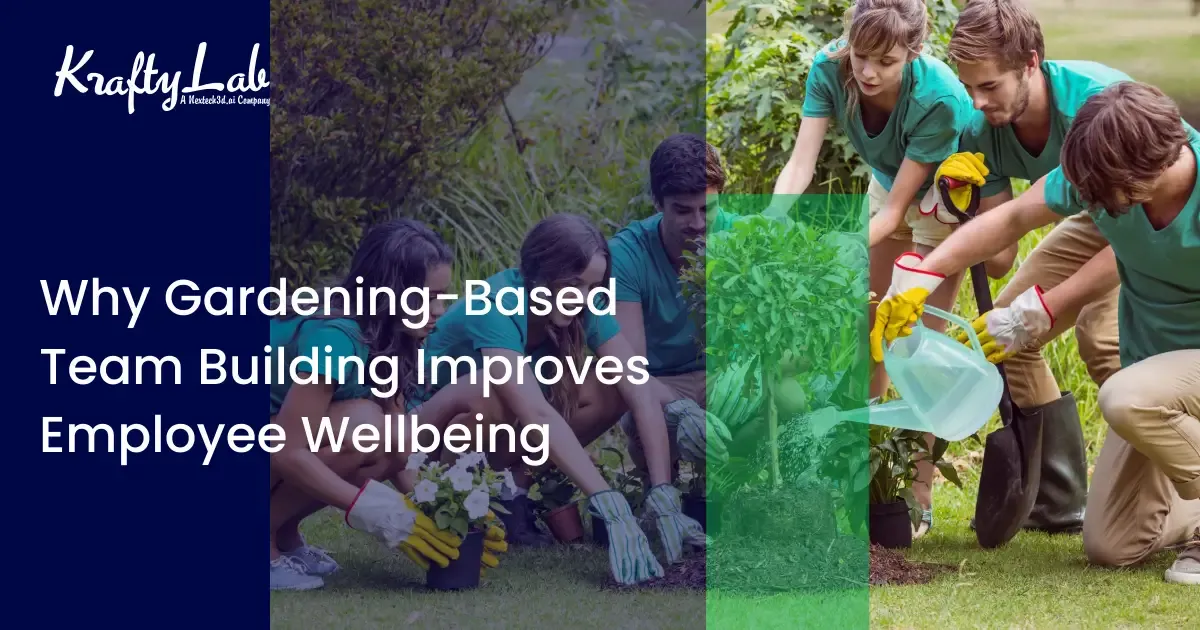
Gardening team building is transforming how organizations approach employee wellbeing activities, shifting from conventional indoor sessions to meaningful, nature-driven experiences that strengthen both people and culture. As workplaces evolve and burnout becomes a growing concern, companies are actively searching for wellness team building activities that feel authentic, sustainable, and impactful. This approach also supports green corporate team building and long-term environmental team building programs designed around sustainability and collaboration.
Traditional corporate team building activities often focus on short bursts of energy. Gardening, however, offers something deeper. It combines outdoor team building activities, nature-based team building, and purposeful collaboration in a way that supports mental health, engagement, and long-term cultural alignment. Modern organizations are investing in workplace wellbeing programs that go beyond surface-level engagement. Employees today value experiences that promote balance, purpose, and emotional wellbeing. Gardening brings all of these elements together in a hands-on format that fosters genuine connection. Let’s explore why gardening team building activities are gaining momentum across forward-thinking organizations.
The Growing Importance of Employee Wellbeing in Modern Workplaces
Organizations across industries are confronting rising levels of burnout driven by digital overload, performance pressure, and constant connectivity. Concerns around mental health at work and long-term workplace stress management have shifted from HR discussions to boardroom priorities. Employees expect structured employee wellbeing activities that actively support emotional wellbeing at work and contribute to building workplace resilience.
Forward-thinking companies are investing in measurable employee burnout prevention activities and sustainable employee morale boost activities to protect productivity and retention. As part of evolving HR wellbeing initiatives, leaders are redesigning workplace wellbeing programs to deliver long-term impact rather than temporary engagement spikes. This shift reflects a growing recognition that performance outcomes are directly tied to employee health, energy, and psychological safety.
The Evolution of Engagement Strategies in Modern Organizations
Traditional corporate team building activities often generate short-term enthusiasm but rarely produce meaningful behavioral change. Employees now prefer experiential team building activities and hands-on team building activities that foster improving team communication, encourage cross-department collaboration, and strengthen psychological safety at work.
The demand for high-impact employee engagement activities has expanded into creative team building activities for large groups, adaptable hybrid team engagement activities, and inclusive team bonding activities outdoors. Organizations are exploring innovative outdoor corporate team building ideas and integrating sustainable corporate event ideas into their broader corporate culture building activities. These strategies reflect a move toward engagement formats that are immersive, participatory, and aligned with evolving workforce expectations.
The Strategic Rise of Nature-Based Workplace Wellbeing Programs
As companies reassess engagement models, nature-based team building has emerged as a compelling solution. Structured gardening-based team building and thoughtfully designed gardening team building activities are gaining traction within progressive workplace wellbeing programs. These initiatives combine structured collaboration with proven stress reduction activities for employees, creating measurable impact.
Organizations are increasingly incorporating corporate gardening activities into broader sustainable team building activities, aligning them with corporate social responsibility activities and forward-looking CSR team building ideas for companies. From community gardening events and corporate volunteering activities to scalable green team building ideas and eco-friendly team building initiatives, companies are recognizing the broader value proposition.
Leaders are also acknowledging the tangible benefits of gardening for employee wellbeing, particularly in relation to how gardening improves team collaboration. Integrated into nature-based workplace wellness programs, gardening workshops for employees support connection, accountability, and shared ownership. As organizations continue to prioritize long-term resilience and culture alignment, wellness team building activities rooted in sustainability are emerging as a strategic investment rather than an optional perk.
How Gardening Strengthens Team Collaboration and Communication
Organizations today are rethinking how employee wellbeing activities can deliver measurable business outcomes. While many workplace wellbeing programs focus on individual health, forward-thinking companies recognize that wellbeing and collaboration are deeply connected. This is where gardening-based team building stands out. More than just a refreshing break from routine, it creates an environment where teamwork develops naturally through shared purpose and action.
Besides, gardening team building activities combine physical engagement, reflection, and communication in one experience. As a form of nature-based team building and outdoor team building activities, gardening strengthens collaboration while simultaneously supporting mental health at work. The result is stronger relationships, better alignment, and long-term cultural impact.
Shared Responsibility and Problem-Solving
One of the strongest drivers of collaboration is shared ownership. In corporate gardening activities, employees work together to prepare soil, plant seedlings, design layouts, and maintain growth cycles. These are not isolated tasks; they require coordination and collective decision-making.
This is where how gardening improves team collaboration becomes visible. Teams must discuss timelines, delegate roles, solve unexpected challenges like plant health issues, and adjust strategies when necessary. These shared challenges mirror workplace scenarios but unfold in a relaxed environment. As a result, participants develop stronger communication habits that translate back into daily operations.
While traditional employee engagement activities may feel performative, gardening emphasizes contribution over competition. It becomes one of the most effective hands-on gardening team building activities, reinforcing accountability and cooperation. The tangible results of planting and nurturing also contribute to motivational corporate gardening activities, as teams see the direct outcome of their collective effort.
From a strategic perspective, this makes gardening one of the most impactful outdoor team building gardening activities. It blends collaboration with problem-solving while supporting employee burnout prevention activities by encouraging restorative outdoor participation.
Improving Team Communication Organically
Formal workshops often attempt to teach communication skills explicitly. In contrast, gardening-based team building improves dialogue organically. Participants talk while working, exchange advice, and coordinate tasks without feeling observed or evaluated. These gardening workshops for teams strengthens improving team communication in a way that scripted exercises cannot. Employees practice listening, clarifying, and responding in real time. Because the setting is calm and non-competitive, communication feels authentic rather than forced.
As part of broader stress reduction activities for employees, gardening reduces tension that can otherwise block open dialogue. The outdoor setting encourages slower, more thoughtful interaction. Over time, these eco-friendly team building activities contributes to emotional wellbeing at work and stronger team cohesion. Organizations integrating gardening into their nature-based workplace wellness programs often report better collaboration across meetings and projects. These benefits highlight the broader benefits of gardening for employee wellbeing, extending beyond stress relief into tangible business improvements.
Cross-Department Collaboration
Silos remain one of the most persistent challenges in growing organizations. Structured meetings sometimes reinforce hierarchy, limiting informal connection. Corporate gardening activities break these barriers by placing employees from different departments into shared, equal roles. In many cases, cross-department collaboration emerges naturally during community gardening events or large-scale green team building ideas. A marketing specialist and operations manager working side by side on irrigation planning discover common ground beyond job titles. These conversations build familiarity that improves future project coordination.
This is particularly powerful in hybrid team engagement activities, where remote or distributed employees may rarely interact outside scheduled calls. Gardening creates space for informal dialogue, strengthening alignment across functions. As part of broader corporate culture building activities, gardening reinforces shared identity. When teams participate in corporate volunteering activities or CSR team building ideas for companies, collaboration extends beyond internal goals to collective social impact. This combination of purpose and teamwork strengthens trust and reinforces organizational values.
Psychological Safety in Non-Competitive Environments
Competition can energize teams, but it can also discourage participation. Not all employees thrive in high-pressure settings. One of the key strengths of nature-based green team building is its inherently cooperative structure.
In gardening sessions, there are no winners or losers. The focus of these gardening team building activities for employees is on growth, patience, and shared achievement. This atmosphere supports psychological safety at work, allowing participants to express ideas without fear of judgment.
Such environments are essential for promoting outdoor team bonding through gardening. When employees feel safe contributing thoughts and suggestions, collaboration deepens. Gardening becomes one of the most inclusive wellness team building activities, welcoming diverse personalities and communication styles.
The calming effect of outdoor settings also supports workplace stress management. Reduced stress enhances clarity and openness, making gardening an effective complement to other HR wellbeing initiatives. As employees feel more relaxed, they are more likely to engage fully in dialogue and cooperation.
Because gardening aligns with eco-friendly team building and broader corporate social responsibility activities, it also strengthens shared purpose. Participating in sustainable team building activities or sustainability-focused team building activities creates collective pride, reinforcing psychological safety through mutual achievement.
Types of Gardening-Based Team Building Activities That Drive Results
Designing impactful gardening-based team building initiatives requires more than simply gathering employees around plants. The most successful formats align with employee wellbeing activities, business goals, and long-term culture development. When thoughtfully executed, these experiences become powerful workplace wellbeing programs that support engagement, collaboration, and sustainability. Below are practical formats that consistently deliver measurable outcomes while integrating nature-based team building into modern organizations.
Office or Rooftop Gardens
Office and rooftop gardens are among the most sustainable and visible forms of corporate gardening activities. By transforming underutilized office spaces into green environments, companies create ongoing opportunities for gardening team building activities that extend beyond a single event.
These environmental team building programs are living hubs for employee engagement activities. Teams collaborate on planting schedules, maintenance routines, and seasonal planning, naturally encouraging cross-department collaboration. Unlike traditional outdoor team building activities that end after a day, rooftop gardens promote continuity. Employees take ownership of shared spaces, reinforcing accountability and pride.
From a wellbeing perspective, rooftop gardens support mental health at work by offering quiet, restorative environments. Short gardening breaks can serve as stress reduction activities for employees, helping them reset during demanding workdays. Exposure to greenery enhances emotional wellbeing at work and contributes to workplace stress management strategies.
Organizations also integrate rooftop gardens into broader HR wellbeing initiatives, positioning them as part of holistic nature-based workplace wellness programs. This model highlights the long-term benefits of gardening for employee wellbeing, including improved morale and stronger team cohesion.
Community Gardening Partnerships
Partnering with local communities for gardening projects elevates gardening-based team building into meaningful corporate social responsibility activities. These initiatives often take the form of community gardening events, where employees volunteer to revitalize public spaces, support schools, or contribute to food sustainability programs.
Such initiatives are powerful corporate volunteering activities that align with environmental and social impact goals. They qualify as impactful CSR team building ideas for companies, reinforcing organizational values while promoting collective purpose.
Community projects encourage team bonding activities outdoors, strengthening interpersonal relationships in a relaxed setting. Working together in service for CSR team building gardening projects enhances psychological safety at work, as employees collaborate outside hierarchical structures. These projects represent some of the most meaningful experiential team building activities. Participants connect not only with each other but also with their communities, reinforcing pride and belonging. Community gardening partnerships are also considered forward-thinking sustainable corporate event ideas, blending engagement with environmental responsibility.
Tree Plantation Drives
Tree plantation drives remain one of the most scalable green team building ideas for organizations of all sizes. As part of eco-friendly team building, tree planting initiatives symbolize long-term growth and environmental commitment. These drives work particularly well as creative team building activities for large groups, making them ideal for annual offsites or large-scale corporate gatherings. Planting trees requires coordination, teamwork, and shared effort, contributing directly to how gardening improves team collaboration.
These tree plantation drives double as employee burnout prevention activities. Being outdoors reduces digital fatigue and supports mindfulness activities at work. The physical nature of planting encourages movement, which contributes to building workplace resilience. As structured outdoor corporate team building ideas, tree plantation drives align seamlessly with sustainable team building activities. They demonstrate measurable environmental impact while promoting unity and shared achievement.
Indoor Planting Workshops
For organizations with limited outdoor space, indoor planting workshops offer accessible gardening workshops for employees. These sessions are excellent hands-on team building activities that combine education with creativity.
Indoor workshops often include herb planting, terrarium creation, or desk plant sessions. These formats support wellness team building activities by introducing calming, tactile experiences into the workday. Employees learn plant care while engaging in collaborative team building activities for Earth Day, enhancing improving team communication.
Such workshops also serve as effective. Remote participants can receive planting kits and join virtually, ensuring inclusivity across distributed teams. This flexibility makes indoor sessions adaptable components of broader workplace sustainability team activities . In addition to supporting employee morale boost activities, indoor workshops reinforce corporate culture building activities. Employees leave with tangible reminders of shared experiences, strengthening emotional connection to the organization.
Sustainability Challenges and Green Campaigns
Sustainability challenges expand gardening-based team building into long-term engagement campaigns. These initiatives encourage departments to adopt eco-friendly practices, track progress, and collaborate toward environmental goals. Such challenges fall under sustainable team building activities and integrate seamlessly into broader HR wellbeing initiatives. Activities may include composting programs, zero-waste competitions, or internal gardening projects aligned with nature-based team building principles. ESG-focused team building events promote psychological safety at work by encouraging collective accountability rather than competition. They foster cross-department collaboration while reinforcing organizational values.
These campaigns are powerful corporate culture building activities that combine environmental responsibility with engagement. They highlight the measurable benefits of gardening for employee wellbeing, including stronger alignment, improved morale, and enhanced teamwork. As ongoing initiatives, sustainability challenges represent some of the most impactful employee engagement activities. They move beyond one-day events and embed environmental consciousness into everyday operations.
Wrapping Up
In an era where organizations are rethinking engagement, Gardening team building stands out as one of the most impactful approaches to strengthening both people and culture. Unlike traditional formats, gardening team building activities combine purpose, collaboration, and wellbeing in a way that supports long-term growth. By integrating corporate gardening activities into broader workplace wellbeing programs, companies create meaningful experiences that directly improve mental health at work, encourage stress reduction activities for employees, and enhance emotional wellbeing at work.
The benefits of gardening for employee wellbeing extend beyond relaxation. These initiatives foster psychological safety at work, support improving team communication, and promote authentic cross-department collaboration.
If you are ready to implement impactful gardening-based team building and other thoughtfully designed wellness team building activities, Krafty Lab specializes in creating immersive, purpose-driven experiences tailored to your organization’s goals. Partner with Krafty Lab to design experiential team building activities that strengthen wellbeing, collaboration, and sustainable workplace culture. Book A Demo Here: https://www.kraftylab.com/call
FAQs
1. What is Gardening-based team building?
Gardening-based team building involves structured corporate gardening activities that promote collaboration, wellbeing, and sustainability through hands-on participation.
2. How does gardening improve employee wellbeing?
The benefits of gardening for employee wellbeing include improved mood, reduced stress, stronger emotional wellbeing at work, and better workplace stress management.
3. Can gardening activities support mental health at work?
Yes. As part of nature-based workplace wellness programs, gardening encourages mindfulness, reduces anxiety, and supports mental health at work through calming, restorative environments.
4. How gardening improves team collaboration?
Shared responsibilities in hands-on team building activities promote trust, improving team communication, and stronger cross-department collaboration.
5. Are gardening activities suitable for hybrid teams?
Absolutely. Customized formats allow distributed employees to participate in synchronized planting sessions, supporting hybrid team engagement activities.
6. How do gardening initiatives align with CSR goals?
Programs such as community gardening events and tree plantation drives serve as impactful corporate social responsibility activities and effective corporate volunteering activities.
7. Are gardening programs cost-effective?
Many green team building ideas and eco-friendly team building initiatives are scalable, making them practical sustainable corporate event ideas for organizations of all sizes.
8. Can gardening help prevent employee burnout?
Yes. As part of broader employee burnout prevention activities, gardening offers restorative breaks that support building workplace resilience.
9. What types of gardening team building activities work best?
Options include rooftop gardens, gardening workshops for employees, sustainability campaigns, and other creative team building activities for large groups.
10. How often should companies conduct gardening activities?
Integrating recurring outdoor team building activities into ongoing HR wellbeing initiatives ensures sustained impact and stronger employee morale boost activities.